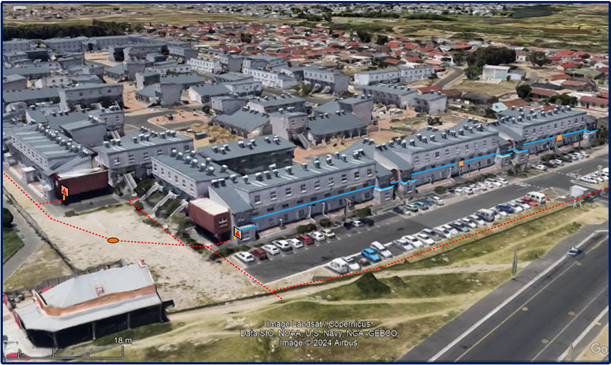
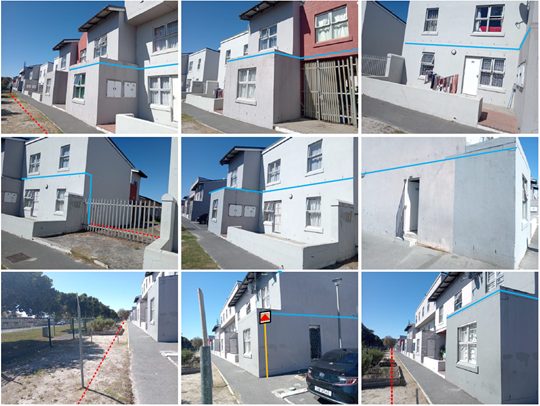
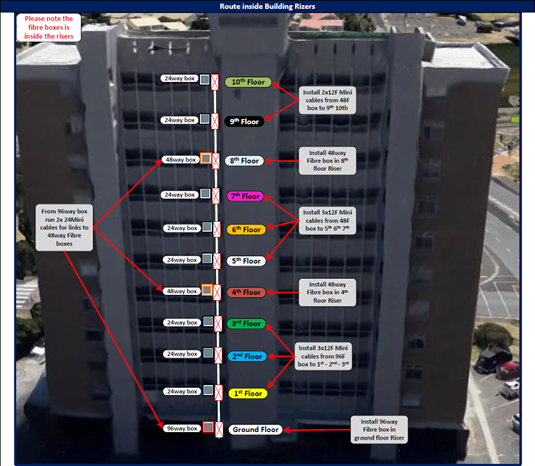
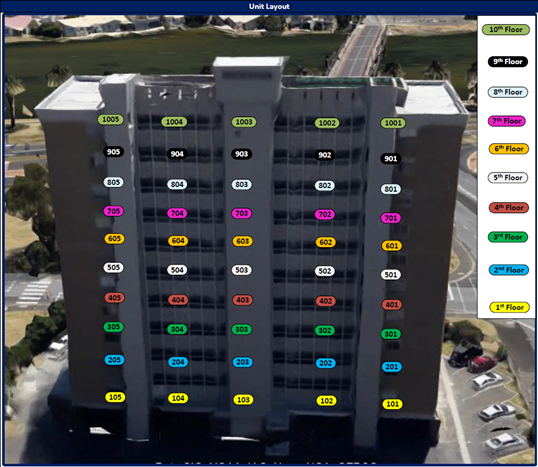
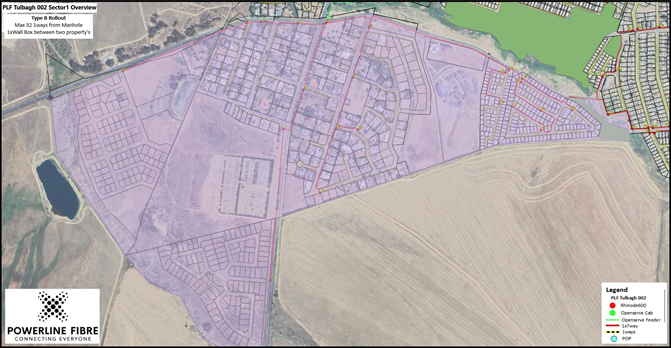
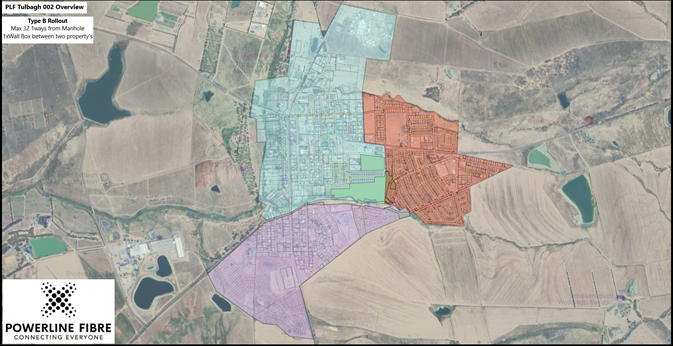
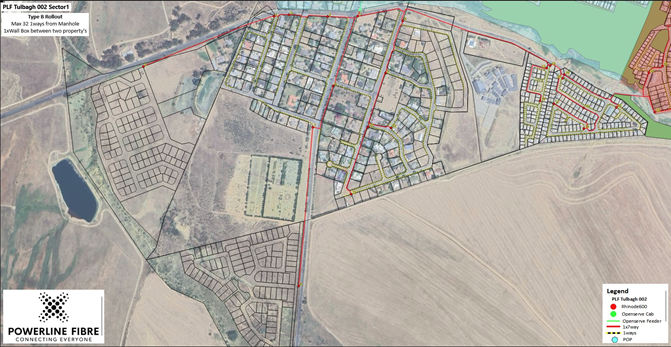
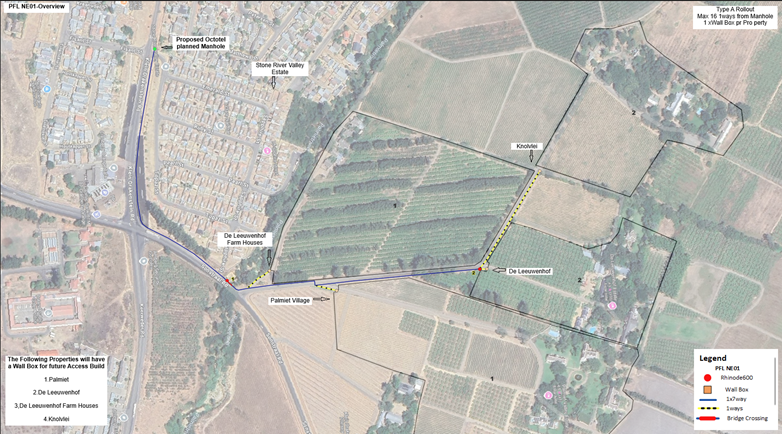
Multi-Dwelling Unit (MDU) planning involves designing and implementing fiber-optic networks for multi-unit residential or commercial buildings. These structures often require customized solutions to ensure that all units have reliable, high-speed internet access. Below is a guide for planning fiber networks for MDUs:
Company programs *Google Earth * Visio *Cape Town map Viewer * Arcgis Maps
Building Survey
*Analyze the building layout (number of floors, units per floor, common areas). *Identify existing infrastructure (conduits, risers, ducts, or shafts available for cabling). *Note potential obstacles, such as narrow pathways or structural constraints.
Connectivity Requirements
*Assess the number of units and their expected bandwidth demand. *Determine if the building needs symmetrical (equal upload/download) speeds for services like streaming, remote work, or gaming.
Regulatory and Permissions
*Obtain permissions from property managers, landlords, or homeowners’ associations. *Ensure compliance with local building codes and telecom regulations.
Core Planning
Fibre network planning involves designing and deploying a reliable and efficient optical fiber network to deliver high-speed internet and communication services. The process integrates technical, logistical, and financial considerations to create a robust infrastructure.
Company Programs
*Google Earth *1 Maps *QGIS
Initial Planning and Feasibility Study
*Understand the requirements: Identify service demand, coverage area, and end-user needs.
*Analyze geographic and demographic factors: Consider urban, suburban, and rural dynamics. *Budget and ROI: Evaluate cost versus potential revenue and long-term sustainability. *Regulatory considerations: Address permits, zoning, and local government requirements.
Route Design
*Mapping and survey: Use GIS tools and field surveys to plot the most efficient paths. *Terrain considerations: Account for obstacles like rivers, buildings, and elevation. *Redundancy planning: Design ring or mesh topologies to ensure fault tolerance.
Network Architecture
*Core network: High-capacity backbone connecting major nodes and data centers. *Distribution network: Aggregates traffic and routes it to local networks.
*Access network: Connects the fibre to homes or businesses (FTTH/FTTB). *Passive vs. active networks: Decide between a passive optical network (PON) or active Ethernet.
Network Extension
Extending a fibre network involves careful planning to ensure feasibility, efficiency, and scalability.
Company Programs *Google Earth *1 Maps *QGIS
Assess Requirements and Objectives
*Purpose: Identify the need for the extension (e.g., residential connectivity, business services, or community-wide broadband). *Service Goals: Determine the speed, reliability, and capacity requirements. *Coverage Area: Define the geographical area to be covered.
Conduct Feasibility Study
*Demand Analysis: Survey the target area to gauge interest and potential uptake. *Regulatory Review: Check local regulations, rights-of-way permissions, and zoning laws. *Cost Estimation: Outline capital and operational expenditures (materials, labor, permits, and maintenance). *Environmental Considerations: Assess environmental impacts and plan mitigation if required.